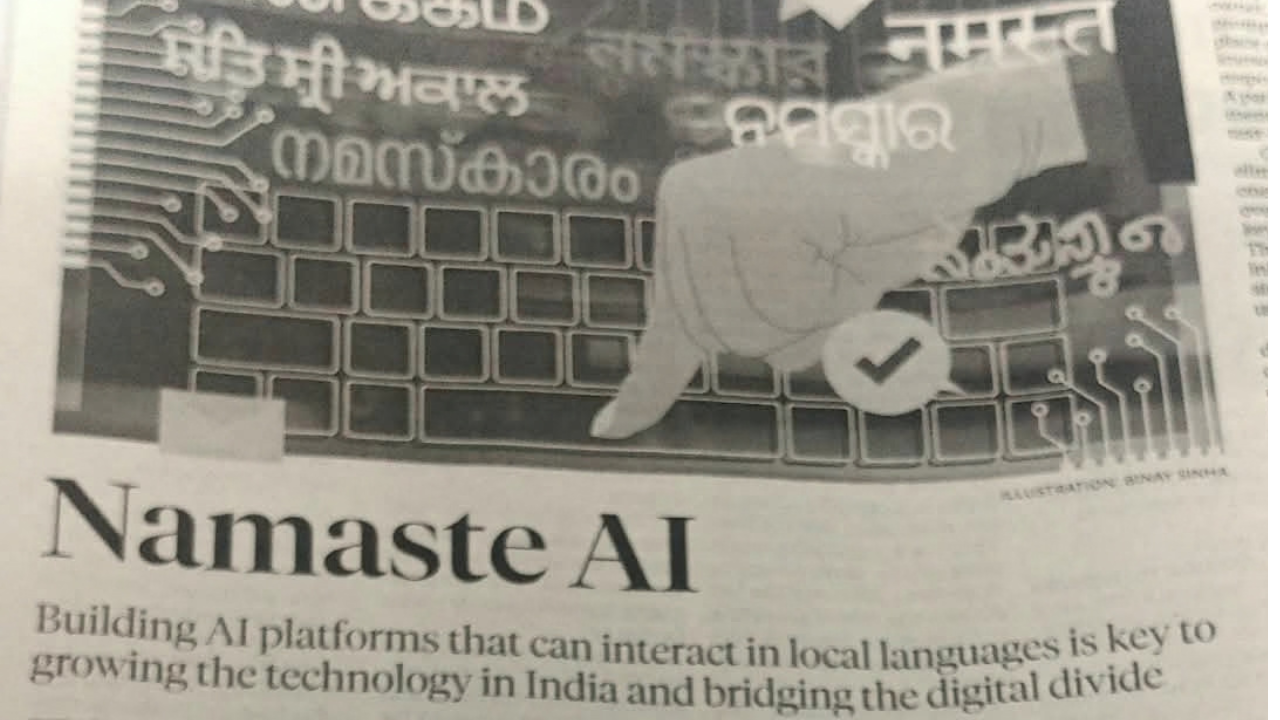
For the first two years of the generative AI boom, foundational models predominantly favored a single demographic: English-fluent knowledge workers typing text prompts into clean browser interfaces.
That baseline represents a tiny fraction of global digital users. Across emerging economies—most notably India—the next phase of digital connectivity belongs to users who interact primarily through voice, regional dialects, and code-mixed speech.
As highlighted in a comprehensive feature by *Business Standard*,closing the digital divide requires moving past generic translations toward native, multilingual foundational models capable of understanding real-world colloquial context.
The Code-Switching Problem: Hinglish, Tanglish, and Beyond
In multi-linguistic environments, everyday commercial speech does not adhere to textbook grammar. A consumer or enterprise executive in Chennai or Bengaluru routinely blends English with Tamil or Kannada in the same sentence; in the north, “Hinglish” is the de facto spoken standard.
Traditional large language models struggle profoundly in these environments. When a model relies on English-centric tokenizers, regional scripts consume significantly more tokens per word—a phenomenon practitioners refer to as the “language tax.”
Furthermore, the standard multi-step workaround—converting vernacular audio to text, translating to English, running model inference, and translating the output back—introduces severe latency and compound translation errors.
Building models natively trained on localized dialects reduces token consumption by nearly 40% while preserving subtle regional context and intent.
Transitioning from “Search-Browse” to “Voice-Action”
The traditional search engine paradigm assumes a user is willing to open a browser, read multiple URLs, and navigate complex navigation menus.
For millions of micro-entrepreneurs, gig economy workers, and regional consumers, that friction has kept digital utility limited.
Conversational voice AI removes this barrier entirely:
Microfinance & Banking: Automated voice agents that handle collection and verification calls in local accents, cutting call handling time by 50 seconds while boosting customer satisfaction scores by 24%.
Healthcare Navigation: Frontline health workers querying WhatsApp bots in spoken regional languages to decipher complex medical schemes and insurance claim procedures.
Commerce & Retail: Voice-activated interfaces that allow merchants to log inventory, check market prices, and process supplier settlements without touching a software dropdown.
What Vernacular AI Means for Search Visibility & Media Distribution
This shift has profound implications for digital publishers, brands, and search marketers:
A.Intent Is Shifting from Keywords to Natural Dialogue
Search queries in voice and AI platforms are conversational, unstructured, and contextual. Optimizing purely for rigid, short-tail keywords leaves brands invisible when users query conversational agents using natural colloquial syntax.
B.The Imperative of Generative Engine Optimization (GEO)
AI answer engines synthesize multi-source information before delivering a direct recommendation. Brands seeking visibility in regional and global markets must ensure their digital footprint is verifiable, semantically clean, and easily interpretable by multi-lingual crawlers.
C. Localized Trust Architecture
Enterprises that publish authoritative, localized, and technically sound assets in regional context will become the primary citations referenced by conversational AI engines as they expand across multilingual demographics.
The frontier of artificial intelligence is no longer just larger parameter sizes—it is localized linguistic relevance.
Prepare Your Brand for the Next Generation of AI Discovery
At Ramviv Digital Media, we help B2B brands and technology ventures build high-intent search visibility, execute strategic content syndication, and adapt to AI answer engines.